
How we compare
Where we fit.
Every way of counting seizures today leaves part of the picture missing. Here is where each one falls short, and what NeuroView does differently.
01 / 05
Seizure diaries
Subjective and incomplete. Can miss more than half of seizures.
NeuroView
Direct physiologic EEG measurement.
NeuroView
Objective. Continuous. Actionable.
Objective
Direct EEG measurement of brain activity. Not patient recall, and not an indirect measure.
Continuous
A continuous record between visits. Not a brief snapshot in a clinic.
Actionable
A clear count of how often seizures happen, to inform treatment decisions.
The missing middle
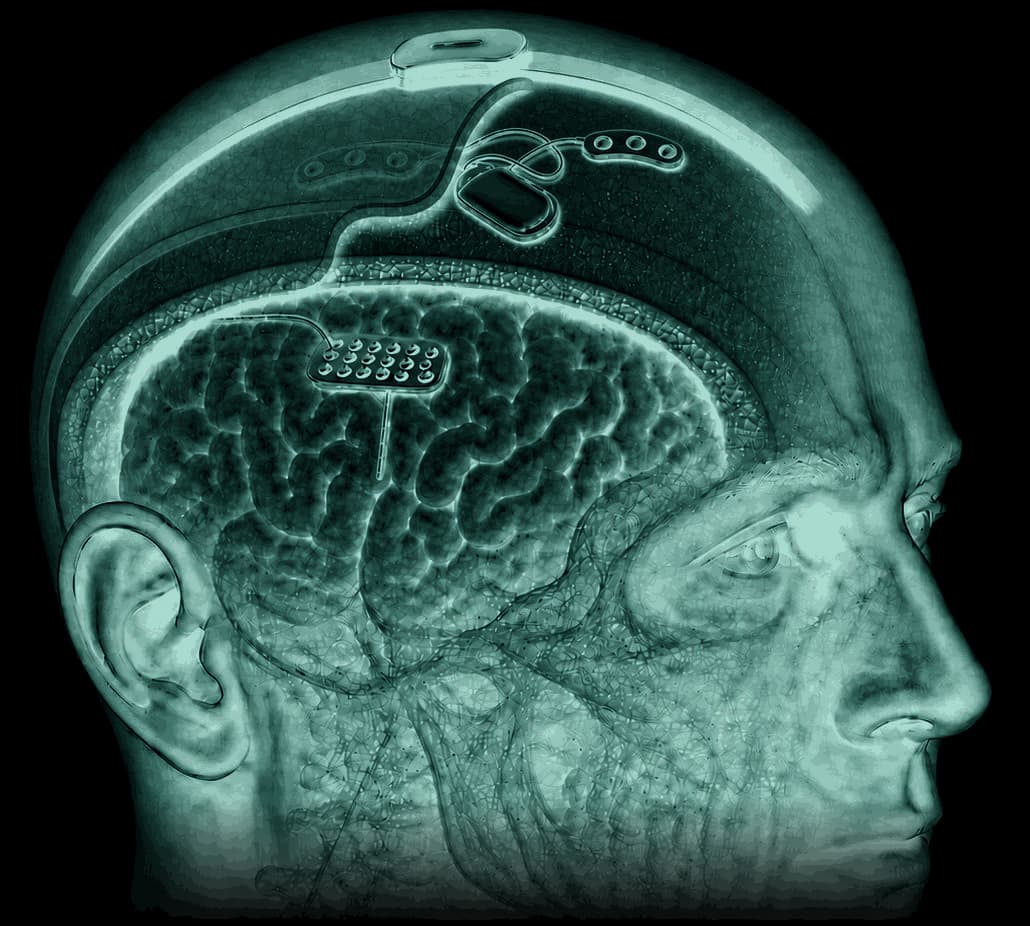
Under the scalp. Outside the skull.
Think of the brain as an orchestra. Watching it has meant a choice between hearing the concert from the street, or miking each instrument on stage. NVT BVS listens from the protected space in between.
On the scalp
Wearables and scalp EEG. Easy to apply, but limited to short windows and surface signals, and only while they are worn.
Like listening from the street outside the theater.
Under the scalp
NVT BVS. Fully implanted and always on, recording continuous sub-scalp EEG over months, with nothing to wear or remember.
Like listening from the protected lobby, the whole performance as it unfolds.
In the brain
Invasive BCIs. A rich signal for restoring targeted function, but major surgery and far more risk than monitoring calls for.
Like miking each instrument on the stage.
First indication
Drug-resistant focal epilepsy.
The first clinical question is narrow by design. How many seizures is this patient actually having in everyday life? The need is unmet, and EEG is the accepted signal at the decision point. Epilepsy first. Other conditions may follow over time.
A proven path
Continuous monitoring already reinvented diabetes, cardiology, and sleep management. The brain is the next organ system for this important paradigm shift to take hold.
Frequently asked questions
Why are seizure diaries unreliable?
A diary depends on someone noticing an event and remembering to write it down. Seizure diaries can miss more than half of electrographically recorded seizures, especially those in sleep and those without outward movement.
How is this different from a seizure-alert wearable?
Wearables infer seizures indirectly, from movement or heart rate, and are largely limited to convulsive events. NVT BVS measures EEG, the brain activity itself.
How is this different from ambulatory or inpatient EEG?
Ambulatory EEG gives a days-long window and is cumbersome to wear. Inpatient EEG is a supervised snapshot in an artificial setting. NVT BVS records continuously at home, over months.
Does the device treat seizures?
No. NVT BVS is a diagnostic monitoring device. It does not deliver therapy; it gives clinicians objective information to guide the choice of therapy.
Who is the first indication for?
Adults with drug-resistant focal epilepsy, where the question of how often seizures actually happen is unanswered today and EEG is the accepted signal at the decision point.
The evidence behind the difference.